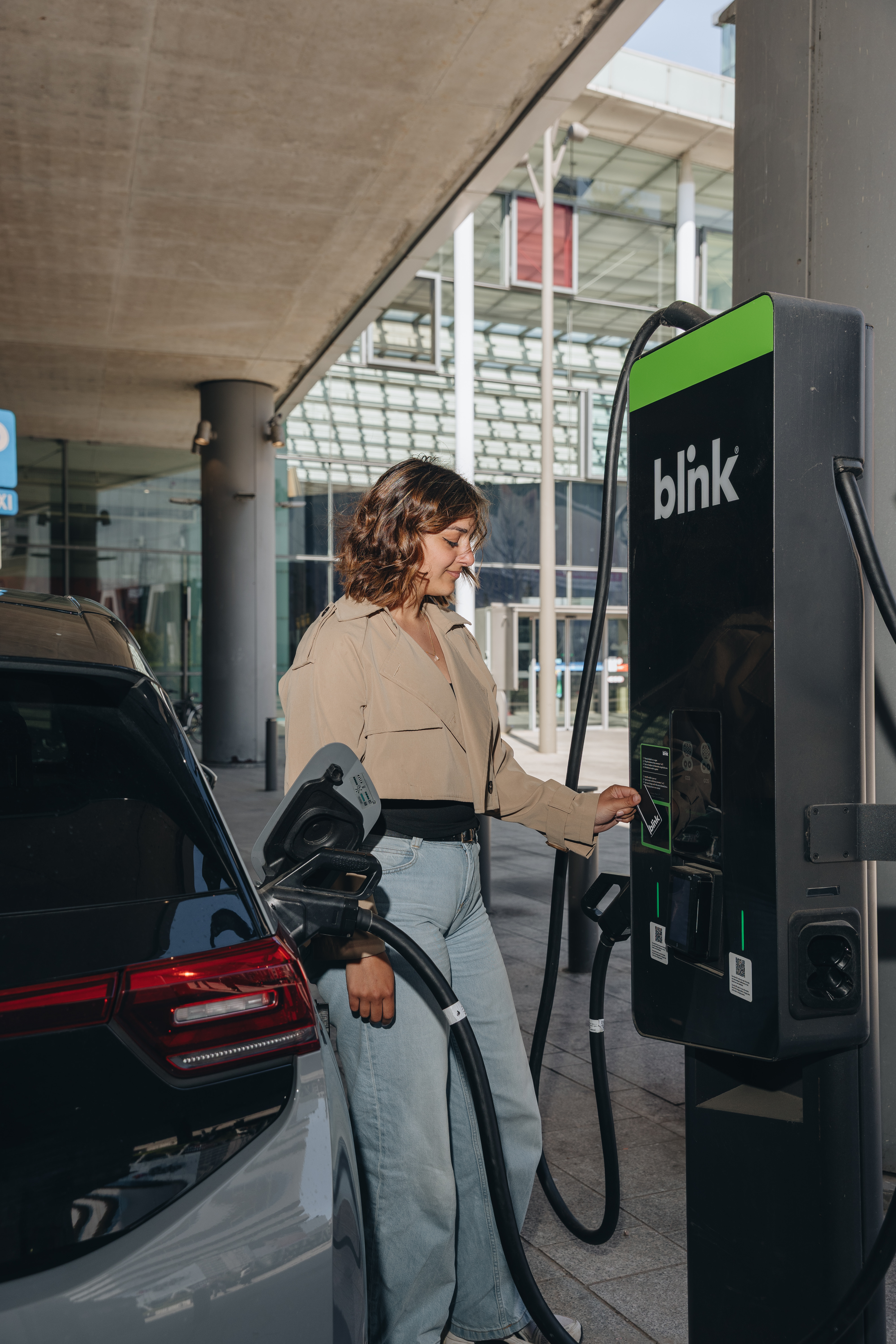

Workplace benefits have always reflected what employees value most. A decade ago, free lunches and gym memberships were differentiators. Today, as electric vehicle ownership in the UK surpasses 1.1 million cars and grows rapidly year on year, the ability to charge at work is fast becoming the benefit EV-driving employees expect, and that forward-thinking employers are racing to provide.
But offering staff electric vehicle charging at work is more than simply installing a few charging stations. Done well, it requires a clear access model, a fair usage policy, an understanding of the relevant tax treatment, and the infrastructure to manage demand as uptake grows. Done poorly, it creates friction: resentment among employees who can't access chargers, administrative burden for HR, and electricity costs that spiral without oversight.
This guide covers everything employers need to know, from the business case for offering employee EV charging to the practical tools that make it manageable at scale.
Why Employers Offer EV Charging to Employees
The motivations behind employee EV charging programmes are rarely single-threaded. The employers who implement them well tend to be driven by a combination of talent, culture and compliance pressures that converge around the same solution.
Talent attraction and retention
EV ownership is rising sharply across professional demographics, particularly among the higher-earning employees that competitive organisations most want to attract and retain. For a team member who drives an EV, workplace charging is not a luxury: it's a practical necessity. The ability to arrive at work knowing their vehicle will be charged by the time they leave is a genuine quality-of-life improvement that influences where people choose to work. Employers in healthcare, education and professional services, sectors where retention is a constant challenge, increasingly cite workplace charging as a threshold benefit for EV-driving candidates.
Supporting company car and salary sacrifice schemes
For organisations running electric fleet vehicles or salary sacrifice schemes, workplace charging is a functional requirement rather than an optional add-on. Employees using salary sacrifice to access an electric company car need somewhere convenient and low-cost to charge. Without workplace infrastructure, the financial logic of the scheme erodes, employees resort to high-cost public chargers, undermining the savings that made the scheme attractive in the first place.
ESG and net zero commitments
Facilitating employee EV charging contributes directly to reducing Scope 3 emissions, specifically, the commuting and business travel category. For organisations with board-level net zero commitments or ESG reporting obligations, this is increasingly a material consideration. Infrastructure investment in employee charging can be evidenced in sustainability disclosures and demonstrates that decarbonisation extends beyond operations to the way employees travel.
Regulatory direction of travel
Part S of the Building Regulations already mandates EV charging provision in new non-residential buildings with more than ten parking spaces. The regulatory expectation is clear: EV charging infrastructure at workplaces is the direction of travel, not an outlier. Organisations that install proactively avoid the cost premium of reactive retrofit and position themselves ahead of likely future requirements.
Access Models for Employee Charging
How employees access workplace charge points is one of the most consequential decisions an employer makes when setting up a charging programme. Get it right and the system runs with minimal friction; get it wrong and you face constant disputes over availability, costs and eligibility.
Open vs Restricted Access
Open access, where any employee with an EV can use any available charger on a first-come, first-served basis, works well in the early stages of a programme when EV adoption among staff is low and demand doesn't outpace supply. It requires little administration and creates goodwill. The risk is that it scales poorly: as more employees switch to EVs, open access becomes a source of conflict rather than satisfaction.
Restricted access models introduce eligibility criteria that manage demand more actively. Common approaches include: Registered vehicle lists, only pre-approved vehicles belonging to registered employees can activate charge points, via RFID card or the Blink app.
Priority tiers, company car drivers or those in salary sacrifice schemes are given priority access, with personal EV owners able to use remaining capacity.
Time-limited sessions, charging sessions are capped at a set number of hours (e.g. four hours) to prevent vehicles occupying bays all day when charging is complete, freeing capacity for colleagues.
Bay rotation systems, smart scheduling tools automatically reallocate charging sessions as vehicles reach target charge levels, maximising throughput without manual intervention.
The right model depends on your current EV adoption rate, car park size and the composition of your workforce. The important principle is building in the flexibility to tighten access controls as demand grows, rather than retrofitting restrictions onto a system designed for open use.