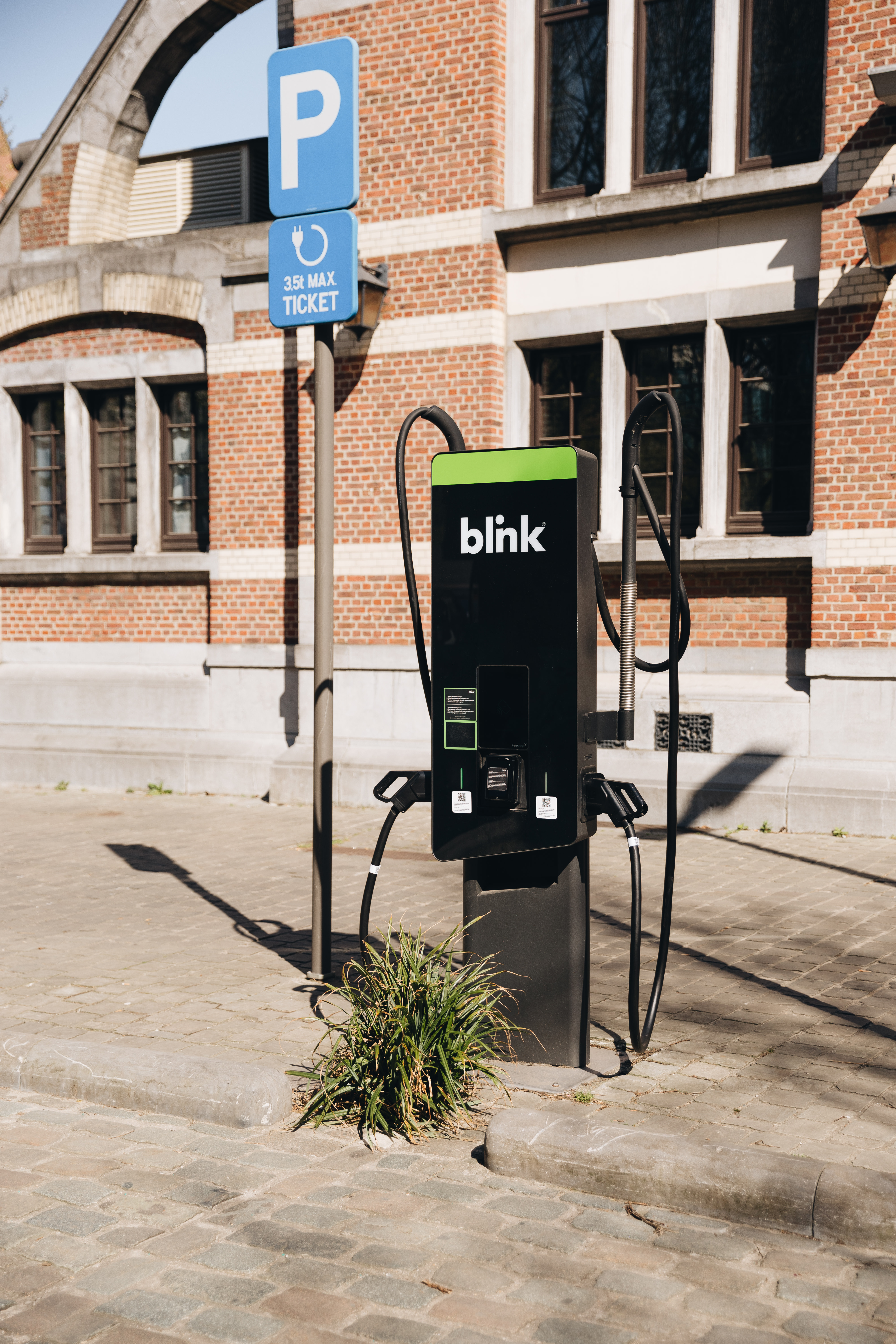

There is a particular irony in the early story of public EV charging in the UK. Billions were invested in motorway rapid chargers and high-profile city-centre hubs, while the infrastructure that most EV drivers actually need for everyday charging, a reliable charge point in an ordinary town centre car park, was often an afterthought. That is beginning to change, and councils and public car park operators are at the centre of it.
Public car parks are, in many ways, the natural home for accessible electric vehicle charging. They already attract footfall, they already have some form of electrical supply, and they serve exactly the drivers who need public charging most: people without a driveway, flat-dwellers without home charging access, and visitors to towns and cities who need to top up while they go about their day.
This guide sets out what councils and operators need to know to plan, fund, and operate EV charging in public car parks: from site selection and compliance through to funding routes and day-to-day management.
The Role of Public Car Parks in EV Infrastructure
The UK government's EV infrastructure strategy is built on a recognition that public charging must work for people who cannot charge at home. Estimates consistently suggest that between 30 and 40 percent of UK households do not have access to off-street parking, and therefore cannot install a home charger. For those drivers, public charging is not a backup option; it is the primary option.
Public car parks sit at the heart of the solution. Unlike on-street charge points, which face constraints around pavement space, footway obstruction, and cable management, car parks offer dedicated bays, existing electrical connections, and the physical space to deploy multiple charge points in a manageable configuration. A single well-equipped town centre car park can serve dozens of drivers every day and provide a meaningful uplift to the local public charging network.
For local authorities, the case extends beyond EV infrastructure. Car parks that offer charging attract longer dwell times and return visitors. They contribute to town centre vitality at a time when footfall is under pressure. And they demonstrate tangible progress against climate commitments, which is increasingly scrutinised by both residents and the central government.
Councils and operators exploring how EV charging fits within a broader parking strategy can find an overview of available solutions on the Blink parking hub.
Typical Charging Patterns in Public Car Parks
Understanding how drivers behave in public car parks is essential to selecting the right hardware and pricing the service correctly. Public car park charging is quite different from workplace or residential charging, and a setup designed for one context can underperform badly in another.
Town centre and retail car parks tend to see dwell times of between one and three hours. Within that window, a standard 7kW AC charger will add between 7 and 21 miles of range, which is useful top-up charging but not a full charge. A 22kW AC unit can deliver three times that, making it a better fit for the shorter visits typical of busy town centre locations. For drivers who plan their stop around charging specifically, a 50kW DC rapid charger delivers around 50 to 75 miles of range in 30 minutes, which maps well onto a supermarket visit or a lunch break.
Long-stay public car parks, such as those serving transport interchanges or hospitals, see much longer average dwell times and are well-suited to 7kW or 22kW AC charging. Drivers parked for four or more hours will receive a meaningful charge from slower hardware, and the lower hardware cost makes deployment across more bays financially viable.
One significant difference between public and workplace charging is the user population. Workplace chargers serve a known group with predictable access controls. Public car park chargers need to work for anyone: regular local residents, out-of-town visitors, drivers without a network membership, and drivers with accessibility requirements. Open-access contactless payment, clear signage, and well-maintained hardware are therefore more critical in a public setting than almost anywhere else.
Planning & Site Selection Considerations
Location & Demand
Not all public car parks are equally suited to EV charging, and deploying in the wrong locations first is a common way to produce disappointing utilisation figures that undermine the business case for further investment.
The most productive sites tend to share certain characteristics: they are in town centres or near high-footfall destinations, they have existing three-phase electrical supply, and they serve a catchment area with growing EV ownership. Demand data from the OZEV public charge point registry and Zap-Map can help identify gaps in the local charging network and direct investment where it will be most used.
Proximity to grid infrastructure matters more than it might initially appear. A car park with a suitable existing supply connection can often support an initial installation of 10 to 20 charge points without a Distribution Network Operator (DNO) upgrade. A remote or lightly connected site may require significant electrical work before a viable installation is possible, with DNO applications taking three months or more in some areas.
Planning permission for EV charge point installations is generally straightforward, with most installations covered by permitted development rights. Multi-storey car parks and listed buildings may require more detailed consideration, and local planning officers can advise on site-specific requirements.
Accessibility & Compliance
Accessibility is not an optional add-on for public car park charging. The PAS 1899:2022 standard, the UK's national specification for EV charge points, sets out requirements that operators should be familiar with before specifying hardware. These include cable management to prevent trip hazards, minimum bay dimensions for accessible parking bays, clear labelling and visual indicators, and requirements around payment methods that do not rely solely on smartphone apps.
Part S of the Building Regulations requires new non-residential buildings and those undergoing major renovation to include EV charge points as part of the development. For existing public car parks, Part S may become relevant when significant works are carried out. Councils and operators planning refurbishment should factor EV charging infrastructure into those projects from the outset, as retrofitting cabling and distribution boards at a later stage adds cost.
Beyond the technical standards, there is a user experience dimension that often gets overlooked in the planning stage. Bays should be visible and well-lit. Signage should be clear from the car park entrance as well as at the bay itself. A driver who arrives hoping to charge and cannot find the charge points, or finds them tucked in an awkward corner, is unlikely to return.
Funding & Commercial Models
Funding is consistently cited as the primary barrier to public car park EV charging deployment, particularly for smaller local authorities and independent operators who cannot absorb large upfront capital costs. The good news is that the funding landscape has improved considerably, and there are now several credible routes available.
Local Electric Vehicle Infrastructure (LEVI) Fund. The LEVI fund is the UK government's primary mechanism for supporting local authorities to build out public charging networks. With over GBP 381 million committed, the fund provides capital support for infrastructure development and is administered through OZEV. Local authorities apply through their regional LEVI support body and can use the funding for site preparation, electrical infrastructure, and charge point procurement. LEVI is particularly well-suited to councils looking to deploy charging across multiple sites as part of a coordinated local network.
On-Street Residential Chargepoint Scheme (ORCS). Although ORCS is primarily designed for on-street charge points in residential areas, councils running integrated charging strategies often use ORCS and LEVI in parallel to address both on-street and off-street needs. ORCS covers up to 75% of eligible costs for on-street infrastructure, reducing the capital burden on local authority budgets.
Revenue-share with a charge point operator. For operators who cannot or prefer not to access grant funding, a revenue-share arrangement with a charge point operator (CPO) such as Blink removes the need for upfront capital entirely. Under this model, Blink installs, owns, and operates the charge points at no cost to the site operator, with the operator receiving a share of charging revenue in return for providing the site and electricity supply. This model is increasingly popular with commercial parking operators and councils that want to offer charging without taking on procurement or operational complexity.
Owner-operator model. Councils and operators with the resources and appetite to own their infrastructure directly can procure hardware independently and contract separately for installation, network management, and maintenance. This model retains 100% of charging revenue and gives the operator full control over the user experience and pricing, but requires more internal capability and ongoing management commitment.
For councils exploring how EV charging fits within wider public infrastructure priorities, the Blink government and public sector page covers funding support, procurement frameworks and partnership options in more detail.