
Skip to Main Content

ESG

Blink is committed to sustainability.Learn More

Level 2 Charging vs. DC Fast Charging Explained

Posted 02/20/2026

Electric vehicle (EV) adoption is accelerating, and infrastructure is racing to keep up. For property managers, municipal planners, fleet operators, and business owners, that means one thing: EV drivers now expect charging to be available and easy to use. Whether it's a workplace parking lot, apartment garage, or fleet depot, the pressure is on to deliver reliable access to EV charging.

In this guide, we’re comparing speed, cost, and site fit between Level 2 charging and DC fast charging, two of the most common commercial charging solutions. You’ll learn which option makes the most sense for your property or business, and how Blink Charging supports seamless installations with flexible, scalable infrastructure.

What Is Level 2 Charging and How Does It Work?

Level 2 charging uses alternating current (AC) power and is the most common EV charging option in commercial and residential environments.

This method is widely adopted in locations where vehicles are parked for an hour or more. You’ll find Level 2 chargers installed in apartment complexes, hotels, office buildings, municipal lots, and retail parking areas. For businesses just getting started with EV infrastructure, Level 2 charging balances performance, affordability, and ease of installation.

Let’s explore why it’s the go-to solution for long-stay environments and how it works behind the scenes.

Is Level 2 Charging AC or DC? 

Level 2 charging supplies alternating current (AC) through a 208-volt or 240-volt electrical connection. In residential settings, this is typically 240V, while many commercial buildings use 208V service. Level 2 chargers may be connected through a dedicated outlet or hard-wired directly into the building’s electrical system. The vehicle’s onboard charger converts that AC into direct current (DC), which charges the battery.

This internal AC to DC conversion is what makes Level 2 chargers more cost-effective and easier to install across parking garages, office campuses, and municipal lots. Since Level 2 charging uses existing electrical infrastructure, it is often the most practical choice for commercial and multifamily properties.

In comparison, DC fast chargers bypass the onboard converter and deliver DC power directly to the battery. This setup requires more specialized equipment and infrastructure, which makes it significantly more complex and expensive to install.

What Types of Plugs Do Level 2 Chargers Use?

Most Level 2 chargers in the U.S. use the J1772 plug, which is compatible with nearly all non-Tesla EVs. Tesla drivers can connect using the North American Charging Standard (NACS) or an appropriate adapter. Blink chargers support multiple connector types, giving site operators the flexibility to serve drivers across all major makes and models.

Explore Blink’s Commercial Products

How Fast Is Level 2 Charging?

Level 2 charging is several times faster than a standard wall outlet, typically delivering 10 to 40 miles of range per hour, depending on the charger and EV.

Level 2 Charging vs. Level 1 Charging

In comparison to Level 2 charging, Level 1 is slow, adding only 3 to 5 miles of range per hour.

That pace is fine for emergency situations or plug-in hybrids, but for full battery electric vehicles, charging from empty to full can take 24 to 48+ hours, depending on battery size. In fact, Blink doesn’t offer Level 1 chargers because they’re not practical for most commercial needs. By contrast, some combinations of Level 2 charging can reach up to 75 miles of range per hour, at least under optimal conditions.

What Affects Level 2 Charging Speed?

Several factors influence how quickly a vehicle charges on a Level 2 system, mainly the charger’s output, the EV’s onboard charging capacity, and whether power is shared across multiple units.

  • Charger Output: Level 2 chargers typically deliver between 3.8 kW and 19.2 kW, depending on the model and available electrical service.

  • EV Charging Capacity: Not all EVs can accept higher power rates. Some older plug-in hybrids may max out around 3.8 kW, while many full battery electric vehicles accept between 6.6 kW and 11 kW or more.

  • Power Sharing: On shared circuits, multiple active chargers may reduce available output per vehicle during peak use.

Planning ahead with the right power supply and charger configuration helps ensure faster, more consistent charging for all users.

What Is DC Fast Charging?

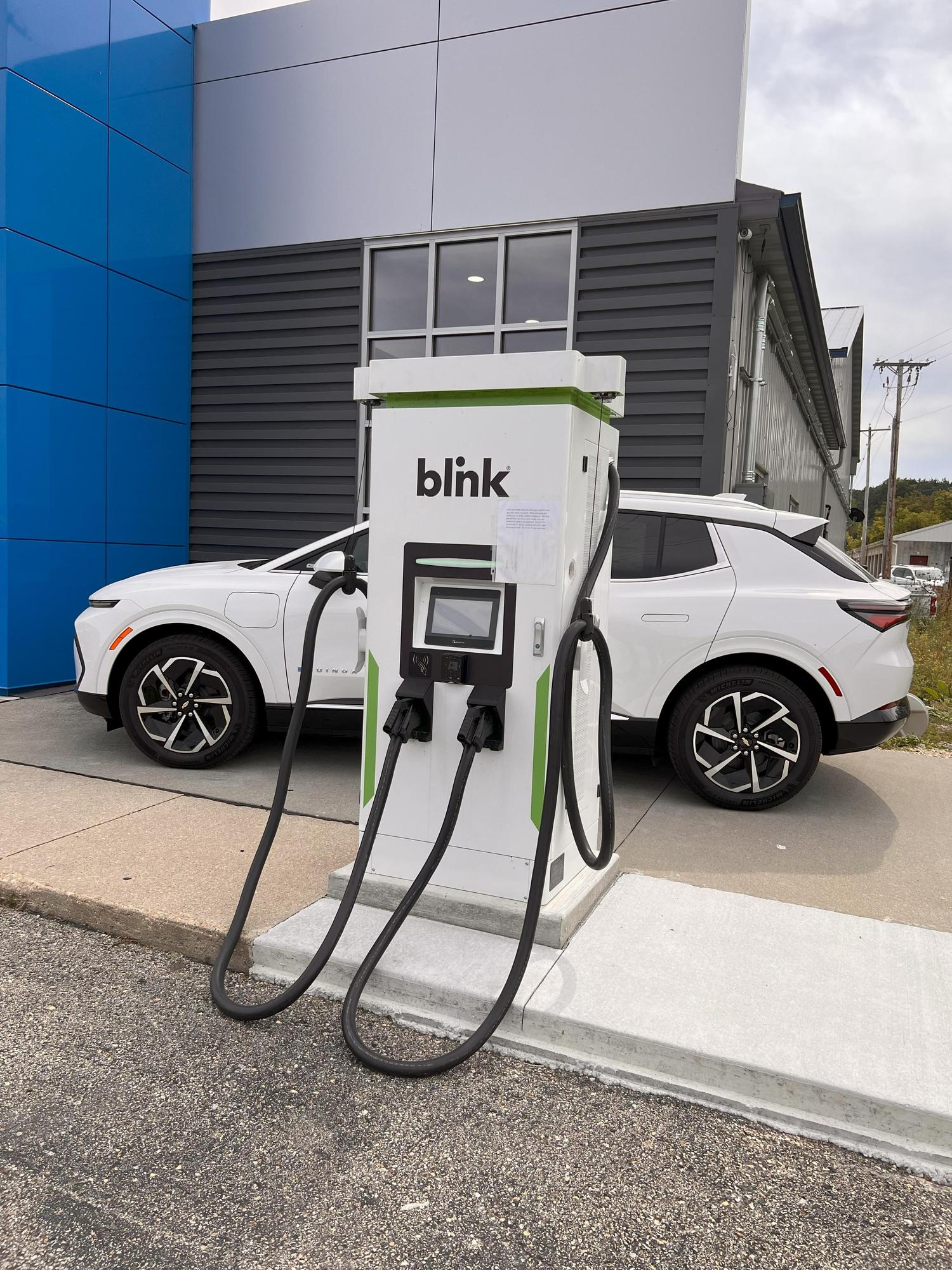
DC fast charging (DCFC) skips the conversion process and delivers high-voltage DC power directly to the battery.

This is the fastest public charging solution available today, capable of adding 100 to 200 miles of range in 30 minutes or less. It’s a go-to solution for fleets, transit agencies, and commercial locations where speed is a top priority.

Let’s take a closer look at how DC fast vs. Level 2 charging options compare.

DC Fast Charger vs. Level 2: Key Differences

Simply put, DC fast chargers bypass the EV’s onboard system and send DC power straight to the battery.

To summarize the typical charging rates between Level 2 and DCFC:

  • Level 2 charger speed: 10–40 miles per hour

  • DCFC speed: 100–200+ miles in 30 minutes, depending on charger and vehicle

But there’s a tradeoff: DCFC requires much more infrastructure, including higher-capacity electrical service, cooling systems, and grid coordination. It’s also more expensive to buy, install, and maintain.

Explore Blink’s DC Fast Chargers

What Are the Cost and Setup Differences Between Level 2 and DC Fast Charging?

Cost is often the deciding factor between DCFC and Level 2, especially for first-time installations or sites with limited budgets.

While DC fast charging offers unmatched speed, Level 2 charging is far more affordable to install and operate. Let’s break down the differences.

Installation and Infrastructure Requirements

The cost and complexity of installing EV chargers varies significantly between Level 2 and DC fast charging.

Level 2 chargers are typically more affordable, often just a few thousand dollars per unit, and can sometimes integrate into existing electrical infrastructure. They usually mount to walls or pedestals and operate on standard 208V or 240V service, depending on the building’s electrical system, minimizing disruption and permitting needs.

DC fast chargers require a much heavier lift. Costs can reach tens of thousands per unit, and installation may involve:

  • Concrete pads

  • Trenching for conduit

  • New transformers or switchgear

  • Coordination with local utilities

  • Upgrades to high-capacity electrical service

Because of these demands, Level 2 charging is often the more practical starting point for sites that aren’t yet equipped for major electrical work.

Operational and Utility Costs

Since DC fast chargers draw significantly more electricity in a short time, they can also result in higher bills and ongoing peak-use fees. Level 2 charging draws power gradually, making it more cost-effective to operate and better suited for everyday use.

Over time, the lower utility and maintenance costs of Level 2 may offset the slower charging speed, especially at locations where drivers stay for extended periods.

Long-Term Value and ROI Considerations

Each charging solution offers different revenue and utilization potential.

  • Level 2: Lower upfront costs, reliable for long-stay locations, excellent for tenant amenities or customer convenience.

  • DC fast charging: Higher throughput, faster turnover, potential for increased revenue, but requires higher investment.

When to Use DC Fast Charging vs. Level 2

Ultimately, choosing between Level 2 and DC fast charging depends on how long drivers stay, how frequently chargers are used, and what kind of experience you want to provide.

  • DC fast charging is most effective for short, high-traffic stops, such as highway corridors, fleet depots, and convenience stores.

  • Level 2 charging excels in places with longer dwell times, such as offices, apartment complexes, and hotels.

If your site serves both types of drivers, a combination of Level 2 and DC fast charging may be the smartest choice. Many sites opt for this hybrid approach, using Level 2 for day-to-day use and DCFC for high-volume or time-sensitive needs.

Blink Supports Your Charging Needs

There’s no one-size-fits-all approach to building EV charging infrastructure. The right setup depends on how long vehicles stay, how much energy your site can supply, and what kind of experience you want to deliver.

That’s why Blink offers flexible charging solutions for every kind of property, from fleet depots and retail lots to apartments, hotels, and transit hubs. We’ll help you plan, install, and manage a system that fits your goals today and scales with you tomorrow.


Do you drive electric? Download the Blink Charging app today to start charging with Blink.

Are you a business or government that wants to attract more EV drivers to your property or community? Contact Blink Charging today to speak with an EV charging expert.

Share this post