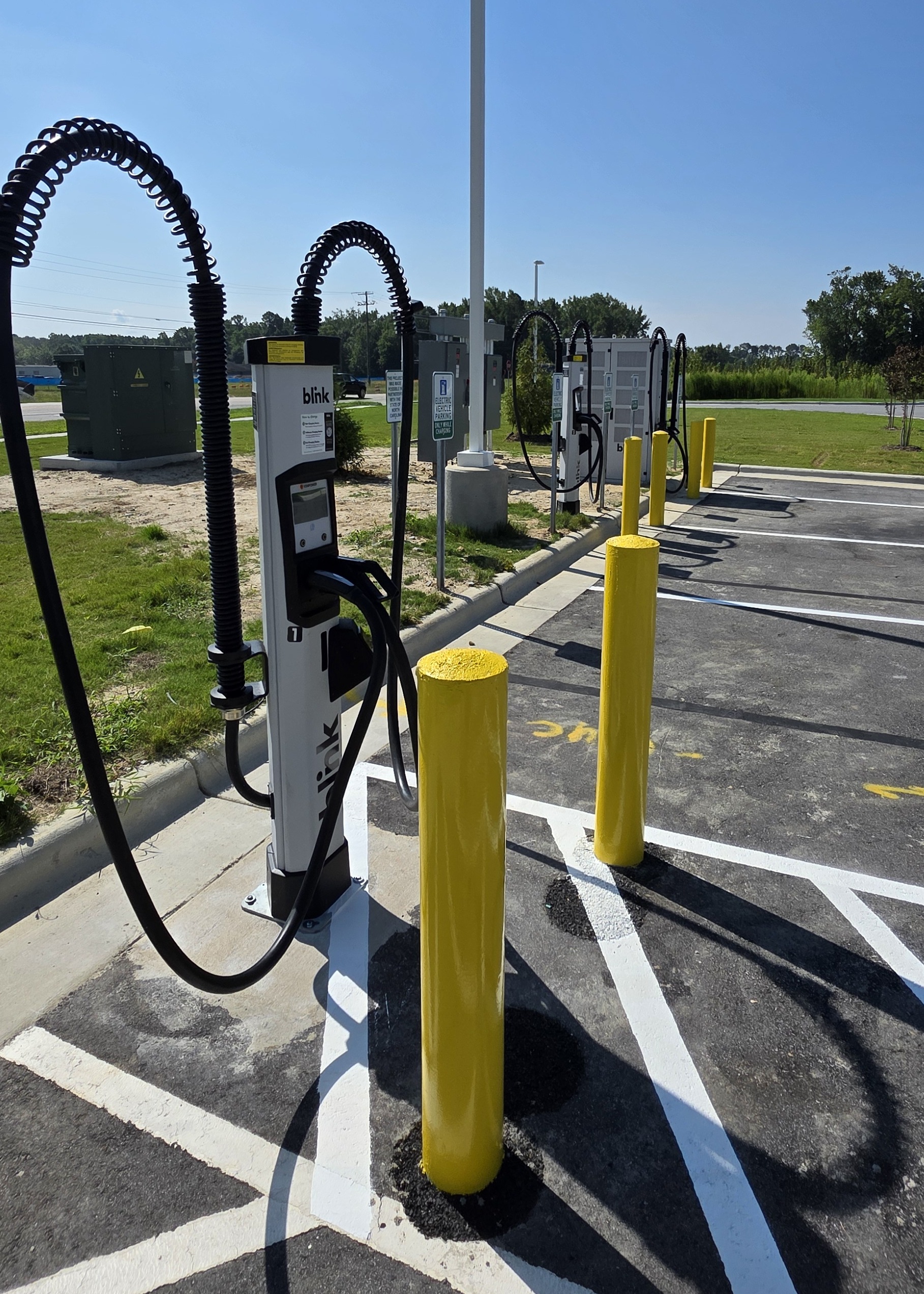

North American automakers have committed to switching the charging ports on their electric vehicle (EV) models from the CCS (Combined Charging System) style to the NACS (North American Charging Standard) style. That shift started this year and will continue in the future until all North American EVs are being sold with the NACS style of charging port. Even though all new models will be sold with the NACS port, there will still be plenty of EVs using the CCS style of port for years.
With an industry-wide change as drastic as the switch from CCS to NACS, it begs the question: What will this mean for current and future Direct Current Fast Charger (DCFC) deployments?
Understanding the differences between NACS and CCS charging connectors
First, let’s look at the similarities and differences between the two charging standards. And before we do that, it should be noted that CCS has two different formats: CCS1 and CCS2.
CCS1 was the format largely adopted in North America while CCS2 is primarily used in Europe.
The similarities
Both NACS and CCS charging ports can:
Accommodate Level 2 charging and DC Fast Charging
Be used for bi-directional charging (feeding electricity back to the electrical grid)
Be used for Plug & Charge payment verification (automatic vehicle verification and payments made when a driver plugs into a charger with no further input from the driver, like swiping a credit card, for example)
The differences
The two plugs physically look different with the NACS being smaller and lighter and combining AC and DC charging capabilities into its five-pin setup. CCS plugs are bulkier and heavier and separate the AC and DC charging pins into two different sections with seven pins in total.
CCS was developed through an automaker-led industry consortium, while NACS was originally developed by Tesla before being standardized as SAE J3400 and adopted by automakers across the North American market.
Until recently, NACS plugs could only be used on compatible charging networks (unless you had an adapter) and CCS plugs could only be used on other charging networks (unless you had an adapter).
250kW charging is common for NACS, with 325kW available at select charging locations. 800V+ battery charging is not yet supported. For the CCS, up to 350kW is common, up to 500kW can be found at some DCFCs, and 800V+ battery charging is already supported.
There has always been a mix of CCS and NACS plugs in the United States, and many drivers have adapters that will allow them to use virtually any EV charger they come across. CCS still is and will continue to be common in the country even as automakers transition their vehicles to NACS. CCS will eventually become obsolete in North America, but the transition to NACS will take years to complete and the used EV market will likely keep CCS around in the U.S. for decades to come.