
Skip to Main Content

Funding

Find EV charging grants & incentivesExplore programs

What You Should Know About Your EV in the First Week

Posted 06/10/2026

It takes time to get used to anything new, and owning an electric vehicle (EV) is no different. Most people nowadays are used to internal combustion engine (ICE) vehicles and switching from one ICE vehicle to another is relatively simple. There may be some differences, but the overall mechanics of how the vehicle works are going to be the same. 

This is not the case when you switch from ICE to EV. You have to learn a whole new system and your mindset about driving and fueling has to change. Fortunately, that change is easy. 

Driving

We’ll start with driving, as that is where you will probably start noticing differences between the two types of vehicles, especially since you will likely be driving your EV off the lot to get it home. 

Accelerating

The first thing you are likely to notice with your EV is that it has more get-up-and-go than an ICE vehicle. This is because in a combustion engine, the process of combustion has to occur to move the vehicle, which naturally takes some time. This is why there is a slight lag between depressing the accelerator and the vehicle’s movement. 

In an EV, the torque is instantaneous. You depress the accelerator and the vehicle moves immediately. This is especially important to keep in mind at red lights. In an ICE vehicle, you may have been tempted to start depressing the accelerator just before you anticipated the light turning green so you could start moving at the exact moment it turned green. In an EV, you have to wait until the light is green because when you put your foot down, your vehicle is going to start moving at that exact moment. 

While driving or waiting in traffic, it’s imperative to remember that your electric vehicle is much more responsive to your inputs than your ICE vehicle was. 

Braking

Another driving behavior that will be affected by switching to an EV is how you brake when using regenerative braking. In a traditional braking system, braking is done via brake pads clamping onto and pressing against a brake rotor (or less commonly, brake pads pressing against a brake drum) which turns the kinetic energy of the vehicle into heat, which then dissipates as the vehicle slows down. 

The details of how exactly regenerative braking works can get a little complicated, but for the purposes of driving, what’s important to remember is that when using it your EV starts to brake as soon as you take your foot off the accelerator. In fact, once you get used to using regenerative braking, it can be possible to do “one pedal driving” where you simply take your foot off the accelerator for braking unless you need to come to a complete stop or it’s an emergency and you need your vehicle to stop immediately. This takes some getting used to, but once you have the hang of it, you’ll likely be using your brake pedal much less than you did when you owned an ICE vehicle. 

The simplified version of how regenerative braking works is that when you brake, it reverses the electric motor, turning the kinetic energy of your vehicle into electricity that is fed back into your EV’s battery, extending its range slightly.

Since the electric motor itself is doing the bulk of the decelerating work, this saves wear and tear on traditional brake components like the aforementioned pads and rotors. (EVs still come equipped with traditional braking systems.)

One last item to note about driving is that much like improving your fuel efficiency in an ICE vehicle, you can extend your EV’s range by driving conservatively, meaning accelerating slowly and steadily from a stop rather than accelerating quickly, and slowing down gradually rather than stopping abruptly.

Charging

And now onto the other major item you will have to get used to when owning an EV: fueling an EV requires a complete mindset shift. 

Rather than having to go to a specialty store to purchase liquid fuel, you can now theoretically fuel your vehicle wherever you can plug it in. Most of the time, this will be at home with a Level 1 or trickle charger, or a residential Level 2 (L2) charger if you’ve had one installed or you live in a housing complex that has installed them. 

But, you may also be able to fuel your vehicle at work if your workplace has installed commercial L2 EV chargers, or at places you visit like retail stores. Or you may need to drive to a specialty location to fuel it with a commercial Direct Current Fast Charger (DCFC) if you need to charge it in a hurry.
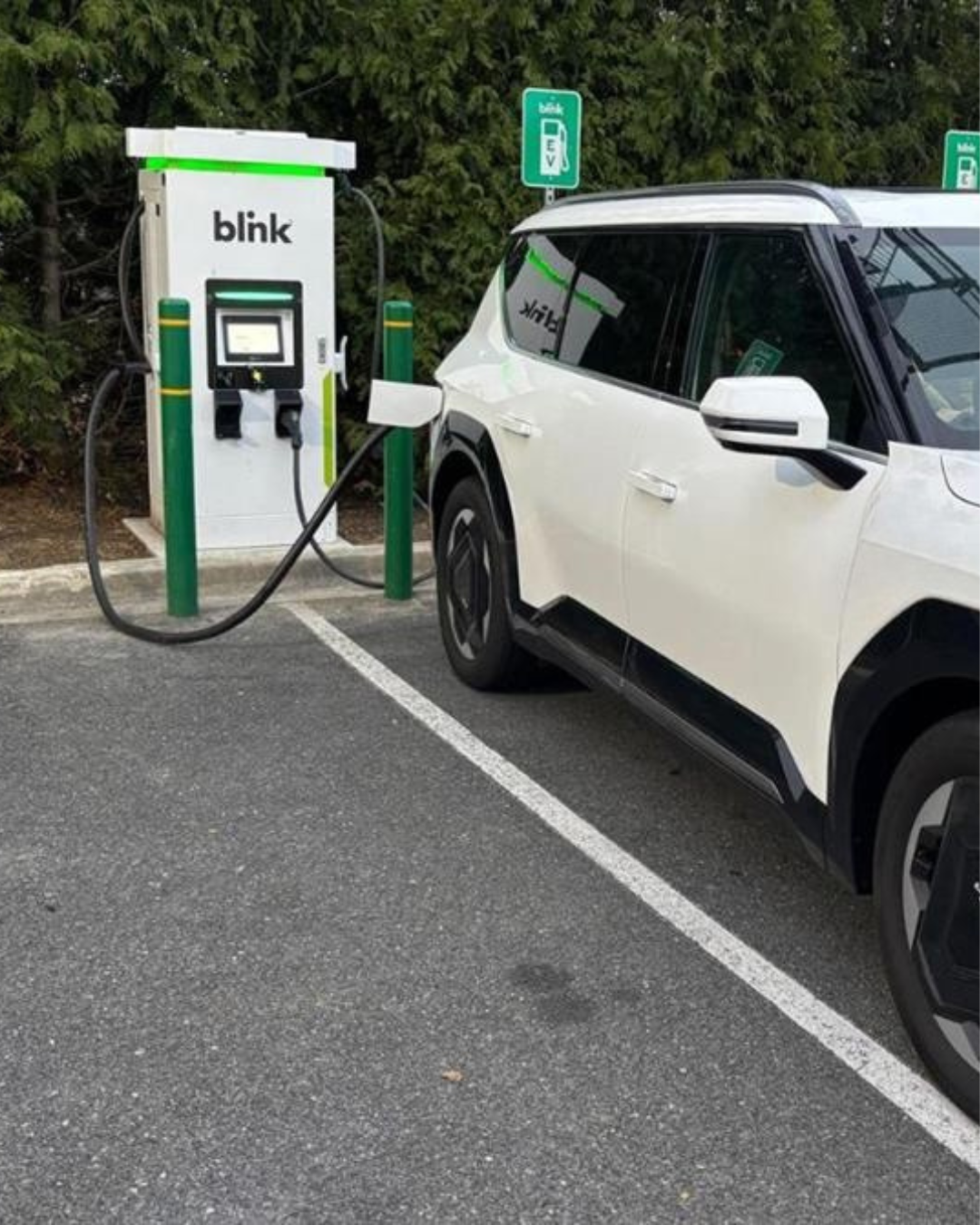
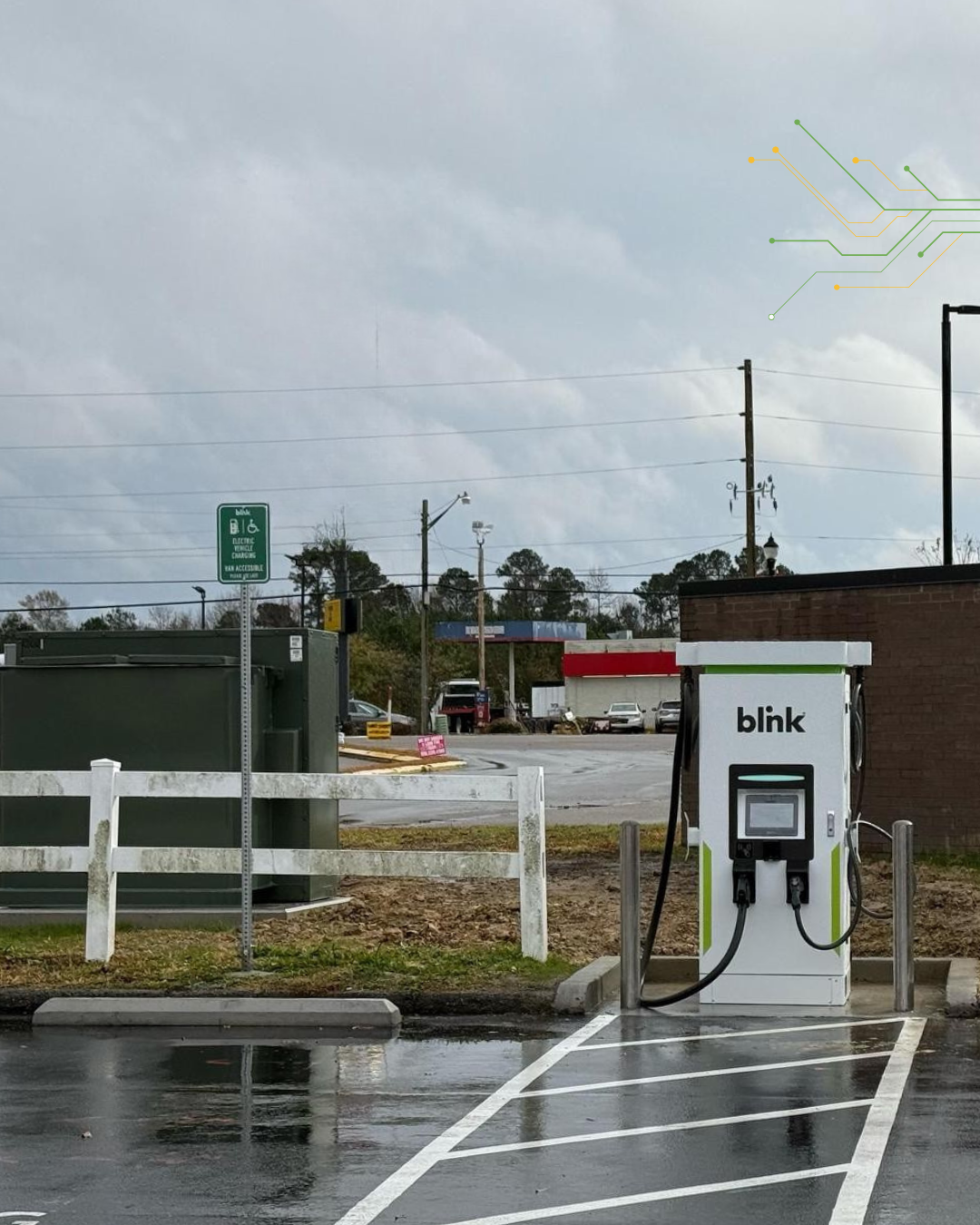
It’s crucial to keep in mind that it's normal for charging speed to vary. Your vehicle isn’t always going to charge at the same speed at every charger. Charging is affected by factors like: 

  • the power output of the charger,

  • your EV’s battery size, 

  • the maximum power acceptance rate of your EV,

  • the battery’s starting charge level, 

  • and the outside and battery temperature. 

If your EV’s on-board charger is only capable of accepting 7kW/h of power, for example, your vehicle isn’t going to charge faster if you use an L2 charger that is capable of delivering 19kW/h of power because it will be “capped” at 7kW/h.

Conversely, if your EV is capable of accepting 19kW/h, but the charger is only capable of delivering 7kW/h, that will also slow charging.

You can use Blink’s Electric Vehicle Charging Time Calculator to figure out an approximation of how long it will take to charge your vehicle based on the variables mentioned above.

Charging Frequency

Perhaps the most important thing to note about charging is that you do not need to charge your EV every day or charge it to 100% every time you plug it in. 

For example, if your EV battery was at 100% at the start of the day and at the end of the day your battery is at 75% and you know you won’t be driving it any more tomorrow than you did today, you can simply opt not to plug it in. Your remaining battery will be enough to cover your driving for the next day if it’s only going to be the same amount of driving. It would be the equivalent of having 3/4 of a tank of gasoline. 

And when you do plug in to charge it, it’s not necessary to always charge it to 100%. In fact, some EV manufacturers may even recommend that you only charge your battery to 80% the majority of the time. This is to save on wear and tear for some EV batteries.

One other reason you may not want to charge to 100% is that if you’re using a DCFC, charging starts to slow down drastically after 80% is reached (or sometimes a slightly higher percentage depending on the type of battery your EV has). It can take as long to go from 80% to 100% as it takes to go from 20% to 80%. So, only charging to 80% saves you time and frees up the charger for someone else who may need it. 

Similarly, it is often recommended that you don’t discharge your battery below 20%, especially in colder weather, as this could leave you in a precarious situation if you are unable to get to a charger in a timely manner. 

Ultimately, your vehicle’s manual will have the best advice for how much and how often to charge and discharge your battery. You can also find useful information on charging your vehicle by using Blink’s EV charging guide.

DCFC usage

Considering that a DC fast charger can fill your battery in under an hour, you may be tempted to always use them to charge. However, this is not recommended because constantly using DCFCs will adversely affect your battery. 

This has to do with the heat generated during DC fast charging. When you charge with a Level 2 charger, it feeds alternating current (AC) into your vehicle’s onboard charger at a slow and steady pace. The on-board charger then converts the AC to DC and charges the battery. But, when you charge with a DC charger, it feeds direct current straight into your EV’s battery, bypassing the on-board charger. While this speeds up the charging process, it also generates a lot of heat, which can negatively affect your battery if you do it all the time. 

DC fast charging should be reserved for long road trips where you need to refuel quickly to continue your journey and occasionally if you need to charge your vehicle in a hurry. Outside of those situations, try to use L1 or L2 charging for day-to-day driving needs.

Range

Within your first week of owning your EV, you will probably get used to its range and how often you need to charge it. It’s important to keep in mind that things like temperature, the type of driving you do, and your driving habits all affect your electric vehicle’s range.

As mentioned earlier, if you are prone to fast acceleration from a dead stop, your range is going to be lower than if you were to accelerate slowly and steadily from a stop. Your range may be diminished in extreme cold or extreme heat. And, much like with liquid fuel vehicles, your vehicle’s range will be lower if you are doing stop-and-start city driving versus highway driving at a constant speed. 


Notifications and Alerts

EVs provide helpful alerts to keep you informed and protect the vehicle’s battery. These notifications are designed to help you, so don’t be worried about them. For example, “Charging Complete” notifications let you know when it's time to unplug your vehicle and battery temperature alerts help protect long-term battery health by letting you know if the battery’s temperature is outside of safe parameters for driving or charging.

Most alerts are informational and do not indicate a problem and they may appear on your vehicle display and/or an accompanying mobile app. Always refer to your vehicle owner’s manual to find out what an alert means and follow the manual’s recommendations for dealing with alerts. 

And remember that your EV comes equipped with a Battery Management System and this system’s sole responsibility is to ensure the health of your vehicle’s battery. It can precondition your battery for charging in extreme temperatures and let you know about the state of your battery at any given time. 

Wrap Up

Getting used to owning an EV need not be stressful. Your mindset will begin to shift almost immediately from being an ICE driver to being an EV driver once you start living with your new electric vehicle and start to learn how it operates and the ways it is different from what you have been used to in the past. Learn more about driving and maintaining EVs by visiting Blink’s Driver Resources and more about how to charge them with Blink’s EV Charging 101.

Your EV owner’s manual is your best friend as you get used to your new vehicle. While you learn about this new world of driving and fueling, enjoy the reduced vehicle noise and don’t forget to carry a squeegee with you to wash your windshield on long road trips in lieu of washing it at the gas station. 

If you are a business that wants to contribute to the expansion of the United States’ EV charging network and attract all these new EV drivers to your business, please contact Blink Charging today to speak to an EV charging expert. 


Do you drive electric? Download the Blink Charging app today to start charging with Blink.

Are you a business or government that wants to attract more EV drivers to your property or community? Contact Blink Charging today to speak with an EV charging expert.

Share this post