
Skip to Main Content

ESG

Blink is committed to sustainability.Learn More

Smarter Fleets, Lower Costs: Understanding the True Total Cost of Ownership Advantage of Electric Vehicles

Posted 03/23/2026

As fuel, maintenance, and regulatory compliance costs continue to rise for fleets, total cost of ownership (TCO) for fleet vehicles is becoming more important than ever. With more efficient operation, stable fuel prices, and a lighter maintenance schedule, electric vehicles (EVs) offer compelling advantages over their internal combustion engine counterparts when it comes to TCO. 

Currently, the initial sticker price for most EVs is higher than an equivalent ICE vehicle, and there are installation costs to consider for the EV charging infrastructure. However, fleet operators have myriad ways to offset these upfront costs, make their fleet more efficient, and recoup their EV investment quickly. 

Total Cost of Ownership: Looking Beyond Upfront Vehicle Costs

TCO includes the cost of vehicle acquisition, financing or leasing, operation, insurance, maintenance, and depreciation while also factoring in incentives that can be used to lower the acquisition price, and the residual value of the vehicle. When it comes to EVs, you also have to factor in the cost of the charging infrastructure purchase, installation, operation, and maintenance. 

It’s true that the upfront costs, particularly for the charging infrastructure, can be steep. However, available tax incentives and rebates for EV chargers and the fuel and maintenance savings a fleet will realize over the next several years goes a long way to offsetting these costs. 

Numerous studies have shown that even if an EV has a higher purchase price than an ICE vehicle, the fuel savings over the course of the vehicle’s lifetime are often enough to offset its higher purchase price. The lower fuel costs are due to the fact that electricity costs less than liquid fuel, and fleets can take advantage of off-peak charging hours – usually overnights and weekends – which come with even lower electricity prices. 

Add to this the lower maintenance costs for EVs, and it can save fleets even more money over the lifespan of the electric vehicles. (More on maintenance below.)

While the federal government’s Commercial Clean Vehicle Credit is no longer available for EVs purchased after Sept. 30, 2025, individual states, counties/regions, and utility providers may have EV rebates, grants, and incentives available. For example, in California, Central Coast Community Energy (CCCE) offers rebates of up to $4,000 for commercial EV purchases, as well as for residential, and public agency EV purchases. In total, 40 states offer some kind of incentive for medium- and heavy-duty EVs.

To search for individual state incentives for EVs, fleet operators can use the U.S. Department of Energy’s search tool for Federal and State Laws and Incentives for alternative fuels and advanced vehicles. 

For incentives and rebates related to EV charging infrastructure, Blink Charging provides our own Commercial Incentives Finder search tool. 

Together, commercial incentives, utility programs that offer lower electricity costs for commercial use, and smart charging strategies help to offset upfront investment in charging infrastructure and lower TCO for EVs.

Route Optimization for EV Fleets

Blink Charging recently teamed up with BetterFleets to help fleet customers optimize their operations by creating digital twins of their vehicles, energy infrastructure, and routes. BetterFleets uses artificial intelligence (AI) to identify areas to improve operational efficiency for fleets, helping them to lower costs. 

To ensure that every fleet route is as optimized as possible, real world variables also must be taken into account.

These can include temperature and weather conditions, terrain and elevation changes, the weight of the payload, and how much stop-and-go driving there will be versus how much highway driving there will be.
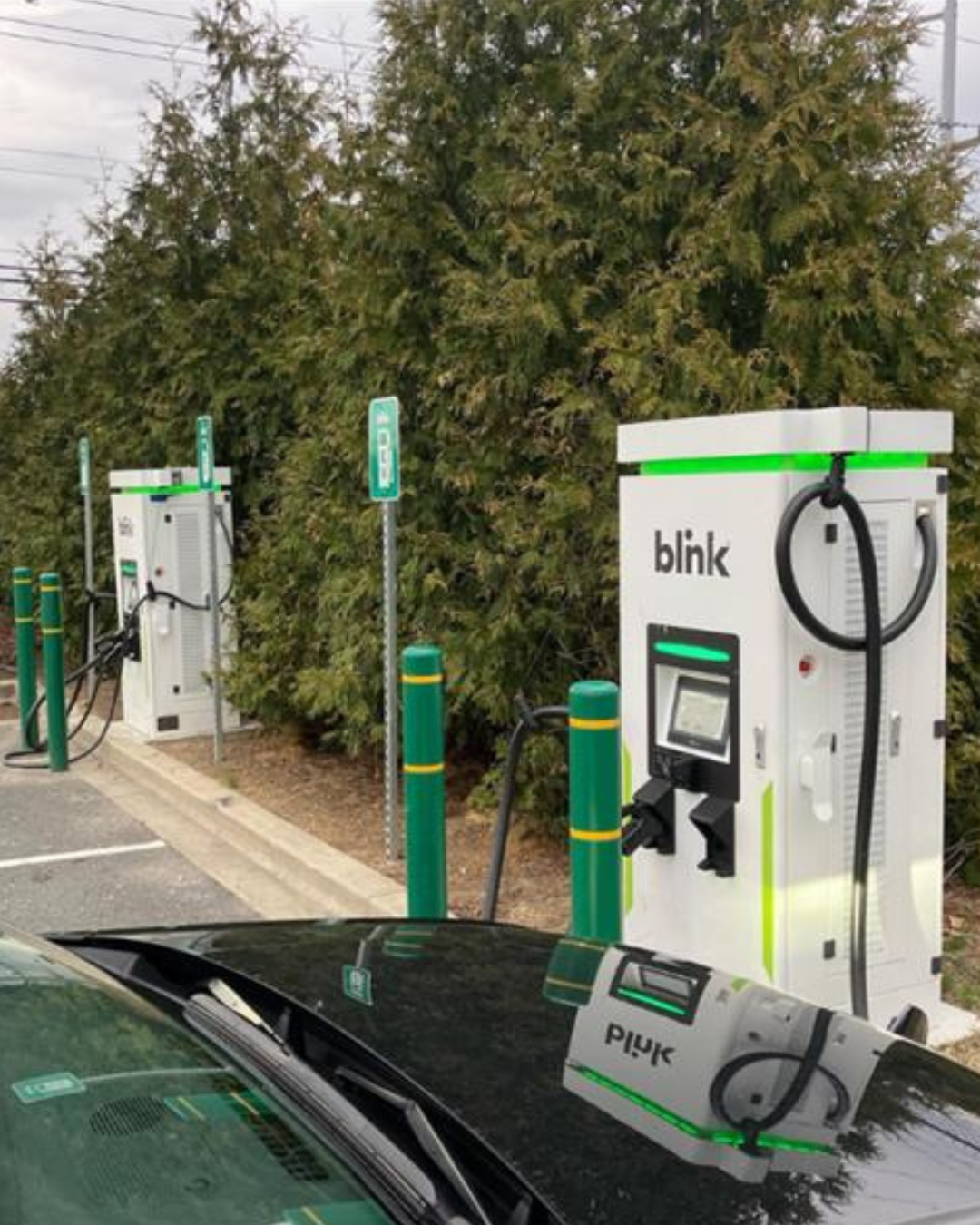
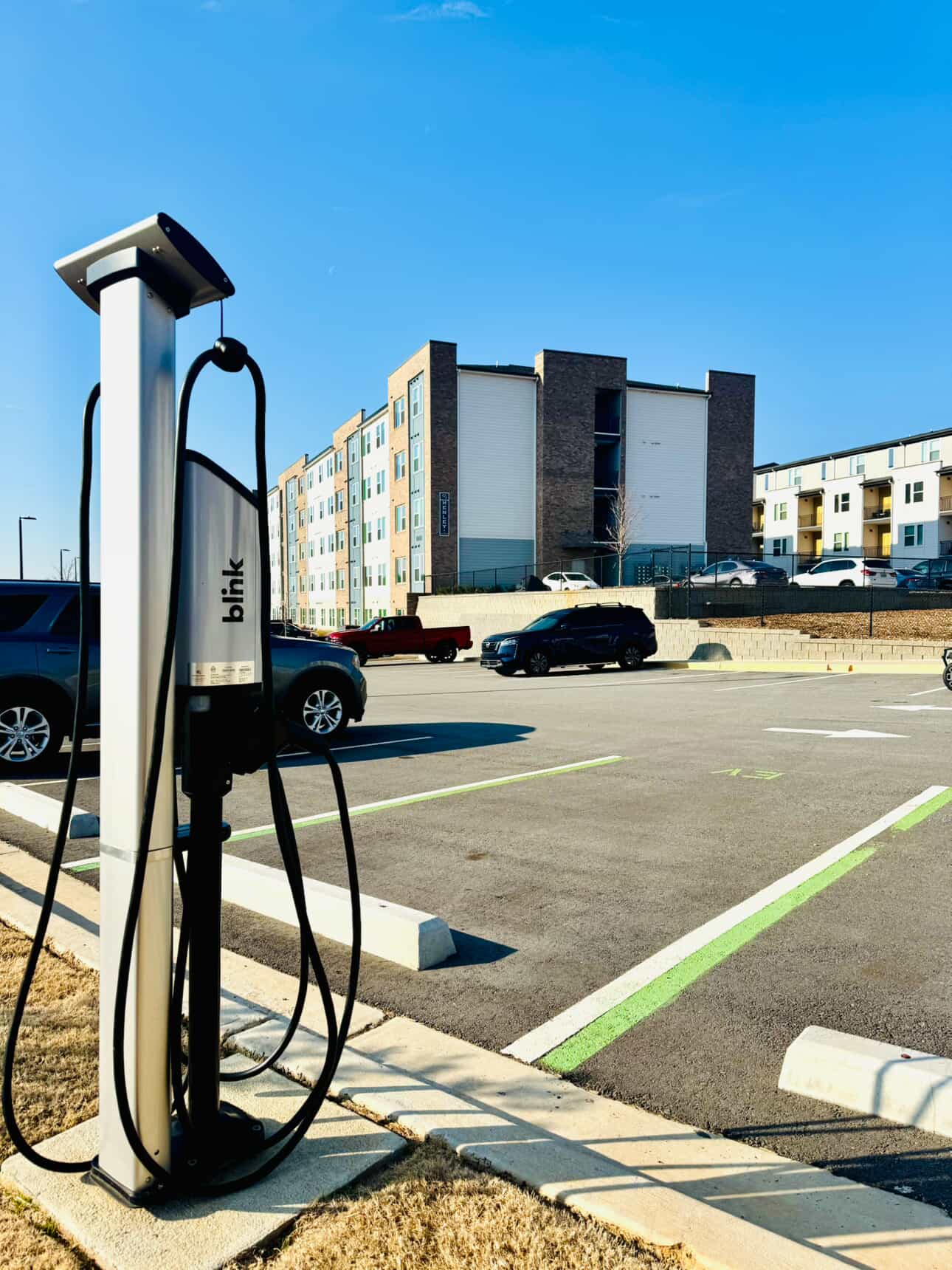
Electric car chargers labeled "Blink" in a parking lot, with a car parked nearby and trees in the background.

For example, you may find that an EV driving mostly downhill or on a flat highway with no payload may be able to get to its destination without having to charge. But, on the way back, having to mostly ascend and carrying a payload, it may require stopping at a publicly available charger. And, it may have to charge going both ways in the middle of winter when EV batteries take a hit to their maximum range. 

With comprehensive software that takes into account individual EV ranges, duty cycles, and charging availability both in-depot and along their routes, and the aforementioned real-world variables, fleet operators can maximize their fleets’ uptime and lower the time it takes to see a return on their EV investment. 

Maximizing Battery Life to Protect Long-Term Value

All batteries wear out, and this is true for EVs. Fortunately, they last a long time, generally between 10 and 20 years, as long as they have no defects. 

There are ways that you can prolong the life of your fleet EV batteries. If you keep your fleet EVs for longer periods, they can retain more battery capacity and if you decide to sell them after a shorter period, they will retain more resale value. 

Best practices for extending EV battery lifespan  

These are the best ways to extend your fleet EVs’ battery lifespans.

Managing thermal conditions

EV batteries perform best between 68 to 86 degrees Fahrenheit (20 to 30 degrees Celsius). Charging and operating in temperatures that are too hot or too cold can affect battery performance and overall longevity. This is why EVs have thermal management systems (TMS) that help cool them when they are too hot or warm them for charging when they are too cold. Making sure your fleet vehicles’ TMS are operating as they should, and always preconditioning your battery for charging in extreme temperatures will go a long way toward ensuring they have a long lifespan. 

Avoiding unnecessary or excessive DC fast charging

If you are unfamiliar with EVs, you may think that it makes sense just to use Direct Current Fast Chargers (DCFCs) all the time. After all, they can charge a battery in under an hour, so why wouldn’t you always want to use them to charge? 

And the answer is because fast charging comes with a cost. DCFCs work by sending direct current straight into the EV’s battery, bypassing its onboard charger. The issue is that direct electrical current is much more intense than its alternating current (AC) cousin. That intensity generates a lot of heat. And, as we discussed in our last section, batteries don’t like extreme heat. While it is okay to charge your fleet EVs with direct current fast charging sometimes, it’s best not to overly rely on this type of charging. The slower, more gentle AC charging that you get from a Level 2 charger allows the battery to be recharged without the excessive heat that can lead to damage and shorten its lifespan. With a Level 2 charger, AC is fed into the vehicle’s onboard charger, which then converts it to DC and feeds it to the battery at a slower rate.

Implementing smart charging schedules 

Piggybacking on the last point, you want your fleet EVs to be ready to go when you need them, but you don’t always want to rely on charging via DCFCs. That is why it’s crucial to have a charging schedule where your vehicles are primarily charging with Level 2 chargers (preferably overnight or on the weekends when electricity costs are lower) and only using DCFCs once in a while when vehicles need a quick charge. 

This is where software like the aforementioned BetterFleets and Blink Fleet Management, which is part of the Blink Network, can help you charge your fleet without overreliance on DCFC charging. 

Prolonging the lives of your EVs’ batteries is just one consideration when choosing your mix of EV charging infrastructure. While each fleet is different, the general rule of thumb is that you will want to install mostly Level 2 chargers to handle your day-to-day charging and have some DCFCs at your disposal for when you absolutely need a fast charge. 

If your fleet is driving mostly set routes at set times during the day, like school buses, for example, you may be able to only install Level 2 chargers and use Blink Fleet Management to automatically start and stop charges during off-peak hours to keep them fully charged without undue stress on the batteries. However, if your fleet’s routes are less predictable, like for deliveries, you will likely need at least one DCFC for times when you absolutely need a vehicle to be charged in a hurry. Smart fleet management with the help of software will allow you to avoid consistently charging the same vehicles with DCFCs and spread the fast charging around so it’s not impacting any batteries more than others. 

The more data you can track and collect about your vehicles’ charging histories and patterns, the better you’ll be able to manage them so as not to overload the batteries with wear and tear and lead to early replacements.

Predictive Maintenance: A New Advantage for EV Fleets

While it’s true that EVs require less maintenance than ICE vehicles because they have fewer components and fewer moving parts, they do still require ongoing maintenance. The aforementioned thermal management systems may have liquid coolant that needs replacing and just like ICE vehicles, they obviously require tire changes. However, the different ways they are driven mean even shared components like tires are on a different maintenance schedule. 

Harbinger Motors, which makes fleet-specific EVs, has published an average maintenance schedule comparing an EV to an ICE fleet vehicle.

EVsICE vehicles
Filter and oil changeN/AEvery 3,000 to 5,000 miles
Fuel filter replacementN/AEvery 30,000 miles
Spark plug replacementN/AEvery 30,000 miles
Coolant serviceFlush at 100,000 milesFlush every 30,000 to 60,000 miles
Tire rotationEvery 10,000 milesEvery 4,000 to 5,000 miles
AC refrigerant serviceCheck annuallyCheck annually
Brake fluidFlush at 30,000 milesFlush at 30,000 miles
Drive unit mount maintenanceReplace every 250,000 milesNeeds vary; inspect during routine maintenance
Filter and oil change
EVs
N/A
ICE vehicles
Every 3,000 to 5,000 miles
Fuel filter replacement
EVs
N/A
ICE vehicles
Every 30,000 miles
Spark plug replacement
EVs
N/A
ICE vehicles
Every 30,000 miles
Coolant service
EVs
Flush at 100,000 miles
ICE vehicles
Flush every 30,000 to 60,000 miles
Tire rotation
EVs
Every 10,000 miles
ICE vehicles
Every 4,000 to 5,000 miles
AC refrigerant service
EVs
Check annually
ICE vehicles
Check annually
Brake fluid
EVs
Flush at 30,000 miles
ICE vehicles
Flush at 30,000 miles
Drive unit mount maintenance
EVs
Replace every 250,000 miles
ICE vehicles
Needs vary; inspect during routine maintenance

Lacking the need for combustion, EV motors don’t need items like oil and fuel filters changed regularly. And EV brake pads and rotors tend to wear out at a slower rate thanks to regenerative braking, which lets the motor recover the vehicle’s kinetic energy (and feed it back into the battery for a slight charging boost) to help slow it down, thus relying on the brake pads and rotors less. 

Similar to how you can use data and telematics to help you manage your EV charging schedules and route planning, you can use them for predictive EV maintenance to:

  • Monitor battery and drivetrain health

  • Predict maintenance issues before they cause downtime

  • Reduce unscheduled maintenance and labor costs

Predictive EV maintenance spots potential problems before they become real problems. For example, they can tell you when a vehicle’s brake pads may be wearing thin so you can have them replaced during routine maintenance rather than having to take that vehicle out of service for that specific maintenance item. Predicting when maintenance will be required rather than reacting to issues as they arise will help you improve fleet uptime and be more accurate with budget forecasting. 

Conclusion: Building an EV Fleet Strategy That Pays Off

When EV fleet managers plan their routing, charging schedules, and maintenance using real-world data, it can significantly lower costs, increase uptime, and keep fleets running at peak performance. An EV fleet running at peak performance will help offset the upfront costs of EV and charging infrastructure purchases. 

With the right strategy, electrification, and fleet management partners in place, fleet operators can improve their efficiency, reduce potential risks, and most importantly, lower the total cost of ownership for EVs and see a rapid return on investment for EV charging infrastructure. To speak to a fleet specialist, please contact Blink Charging today to discuss your specific fleet needs.


Do you drive electric? Download the Blink Charging app today to start charging with Blink.

Are you a business or government that wants to attract more EV drivers to your property or community? Contact Blink Charging today to speak with an EV charging expert.

Share this post