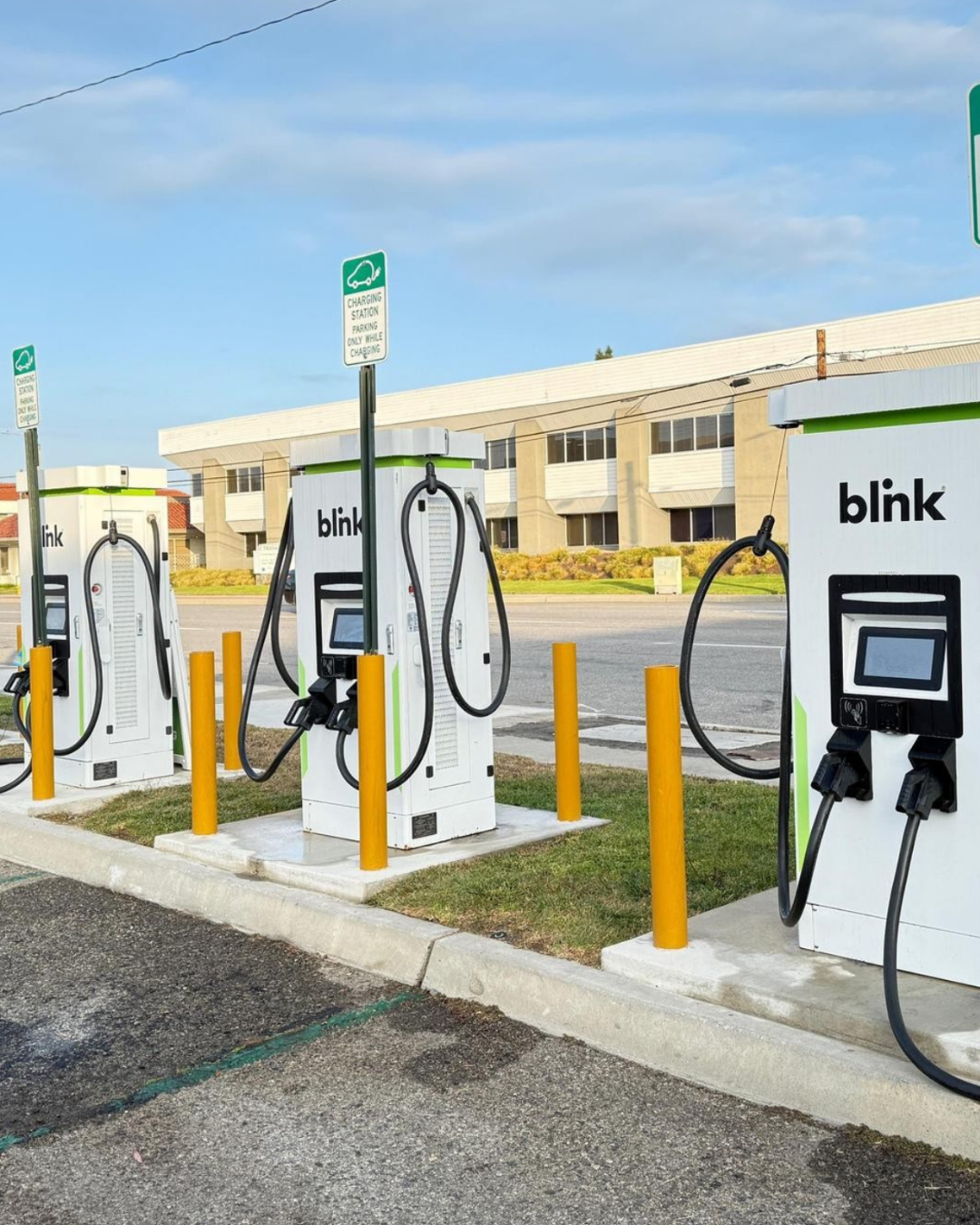

One of the biggest hurdles to businesses installing Direct Current Fast Chargers is cost. Between the cost of the electric vehicle (EV) charging infrastructure, potential electrical upgrades, and installation, things can get pricey. However, there are a few ways to alleviate the potentially restrictive costs. One way is to take advantage of commercial rebates and other funding tools put in place by the various levels of government. Another way (if your business is eligible) is by utilizing the Blink-Owned Business Model.
Why choose DCFCs in Parking Facilities?
The general consensus about EV charging in parking lots is to install Level 2 (L2) chargers so drivers can charge their vehicles as they are patronizing the local businesses. However, not all EV drivers are going to be there primarily to patronize the businesses. Some of them will be there specifically to fuel their EVs. This may be because they live in a home that doesn’t have EV charging infrastructure, or they might be passing through the city or town and this is just a fueling break for them, or maybe they need to recharge their battery as quickly as possible so they can use their vehicle for something specific.
DCFC infrastructure is rapidly expanding along with EV ownership. Soon, it will become a requirement for parking lots to have DCFCs rather than just an option. If your parking lot doesn’t have available DCFCs, customers will simply choose to go elsewhere.
For these drivers, having a Direct Current Fast Charger (DCFC) in place can be beneficial for both drivers and parking facility owners. And, if cost is still prohibitive for you, this is where the Blink-Owned Business Model comes into play.
The Blink-Owned Business Model
To put it as simply as possible, the Blink-Owned Business Model is a turnkey EV charging solution for hosts located in high-traffic areas that are able to sustain a steady flow of EV charging customers.
How it works
Blink pays for 100% of the project costs for select locations, including equipment purchase, installation, operation, maintenance, and even electrical upgrades in some cases. Once the infrastructure is installed, Blink shares charging revenues with the host (minus Blink Network connection fees, which are subtracted from the charging revenues to keep the operation cost-free for hosts).
We own the infrastructure, you own the property, and together we provide EV charging services for drivers and split the revenue.
Parking Facilities Benefits
By far the largest benefit to an EV charging host is the cost savings and revenue sharing. Blink pays for all the upfront and ongoing costs and the host simply has to provide the space for the chargers.
However, there are benefits that go beyond that. Once EV chargers are installed, they will be connected to the Blink Network and start showing up in the Blink Mobile App and other EV charging locator services. This will bring EV drivers to your business to charge their vehicles, but also to spend that charging time patronizing the nearby stores, restaurants, and service providers. While DCFCs can rapidly charge vehicles, there is still going to be some time for drivers to wait and while they wait, many of them will likely spend time at the businesses in the vicinity.
Having EV chargers in your parking lot also signifies that your business is forward-thinking and embraces new, more environmentally friendly technology. Younger people, like Gen Z, like to see tangible proof that companies and brands are taking steps to be more sustainable and an EV charging station is a good indicator that your company is doing this.